

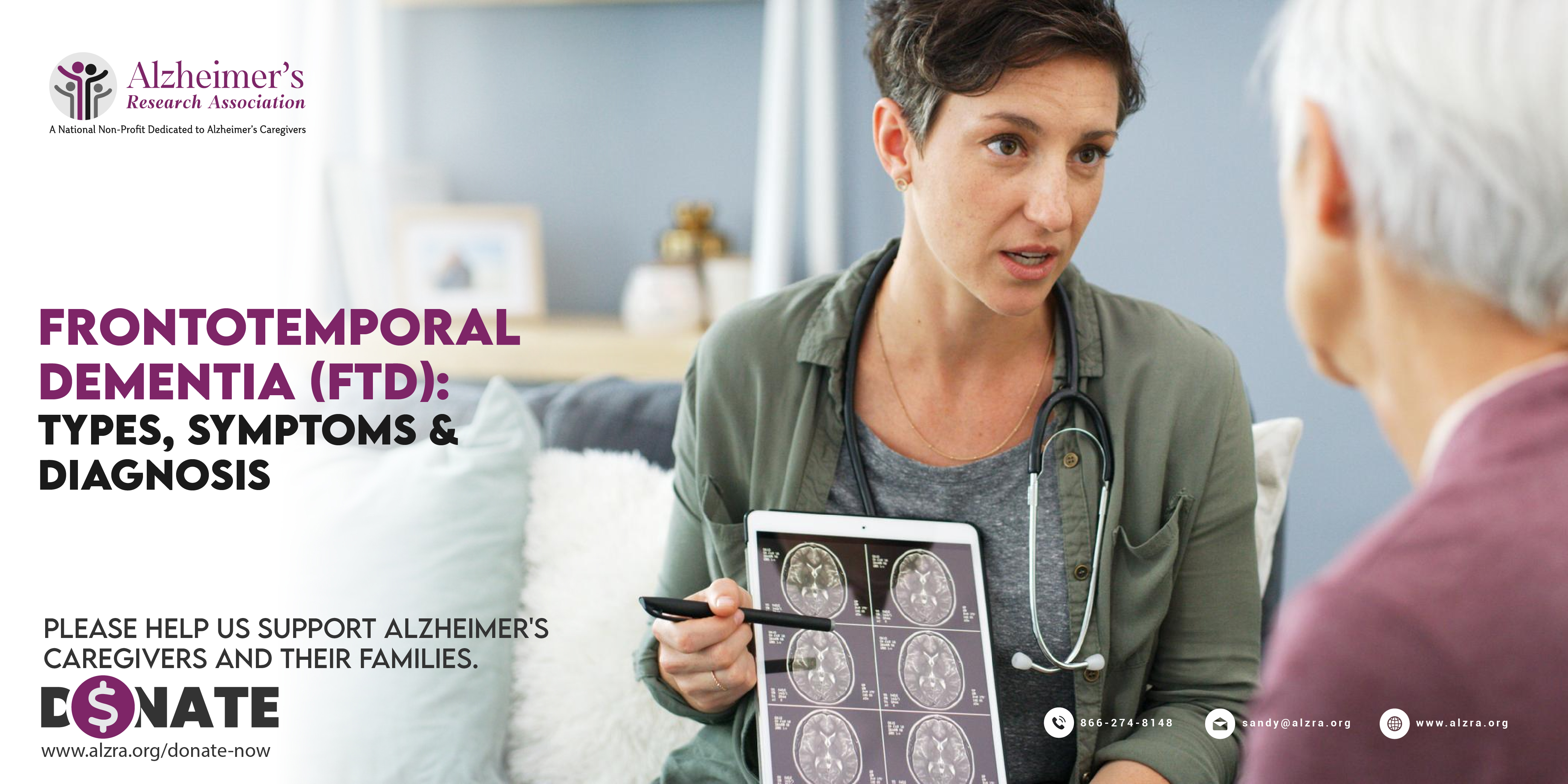
Frontotemporal dementia (FTD), also known as frontotemporal degeneration, is not a single disease but a spectrum of conditions caused by progressive nerve cell loss in specific brain regions, particularly the frontal (the areas behind your forehead) and temporal (the regions behind your ears) lobes. These areas of the brain play a crucial role in regulating personality, behavior, language, and decision-making.
Individuals may experience noticeable changes in the way they think, talk, and interact with others as the nerve cells in these regions gradually deteriorate. These changes can sometimes be subtle at first, making them easy to overlook or misinterpret.
FTD is one of the less common types of dementia. It typically affects individuals between the ages of 40 and 65, though it can occur outside this range. Since it often appears earlier than other forms of dementia, it can be especially challenging for both patients and their families, who may not initially suspect a neurodegenerative condition.
In fact, FTD is considered one of the most common causes of early-onset dementia, highlighting the importance of awareness and early recognition.
Types of Frontotemporal Dementia
Frontotemporal dementia is not a uniform condition. It presents in distinct clinical forms depending on which areas of the brain are most affected. Each type has its own pattern of symptoms, progression, and challenges.
The following are the key types of frontotemporal dementia.
Behavioral Variant FTD (bvFTD)
Behavioral variant frontotemporal dementia (bvFTD) is the most common form of FTD. It primarily affects the frontal lobes, which regulate personality, behavior, and social conduct. Its symptoms are notable behavioral and personality abnormalities that typically affect people in their 50s and 60s but can also appear in their 20s or 80s.
Individuals with bvFTD may act impulsively, lose social awareness, or behave in ways that seem inappropriate or out of character. Apathy is also common, where the person becomes less motivated or emotionally engaged. Over time, judgment and decision-making abilities decline, making everyday functioning difficult.
Primary Progressive Aphasia (PPA)
Primary progressive aphasia (PPA) is the second most prevalent form of frontotemporal dementia. Unlike bvFTD, the early symptoms of this condition are more related to communication difficulties than to changes in behavior. It primarily affects the brain’s language centers in the temporal lobe, impacting language skills such as speaking, writing, and comprehension. PPA typically occurs in midlife, before the age of 65, while it can occasionally happen later in life. There are the following subtypes of PPA:
- Nonfluent/agrammatic variant: This subtype affects the physical production and grammar of speech. Speech becomes slow and effortful, with grammatical errors.
- Semantic variant: This subtype presents as a progressive loss of word meaning and recognition, making it increasingly difficult for individuals to understand definitions or identify familiar objects and faces.
FTD-Related Movement Disorders
In some individuals, FTD affects the parts of the brain that control physical movement and coordination. These types are rarer and can be particularly challenging because they combine cognitive changes with physical limitations.
- Corticobasal Syndrome (CBS): Causes arms or legs to become stiff, shaky, or difficult to control.
- Progressive Supranuclear Palsy (PSP): Affects balance, walking, and the ability to move the eyes.
- FTD with ALS: In some cases, FTD overlaps with Amyotrophic Lateral Sclerosis (Lou Gehrig’s disease), leading to both cognitive decline and progressive muscle weakness.
What Causes Frontotemporal Dementia?
Protein buildup in the frontal and temporal lobes of the brain results in FTD. Speech and behavior issues are common in people with FTD because these brain areas regulate language and behavior. The exact cause of FTD is unknown. About 30%–40% of people with FTD have a family history of the condition [1]. Therefore, experts believe there is a genetic component to it.
However, genetics is not the only major contributor. Environmental and unknown factors likely interact with genetic risk.
What are the Symptoms of Frontotemporal Dementia?
Symptoms of Frontotemporal Dementia vary depending on the brain regions affected, but commonly include:
- Personality and behavioral changes such as impulsivity, inappropriate social behavior, and loss of empathy
- Apathy, emotional withdrawal, and reduced motivation
- Repetitive or compulsive behaviors and rigid routines
- Difficulty with speech, including trouble finding words or forming sentences
- Impaired understanding of language or conversations
- Poor judgment, planning, and decision-making (executive dysfunction)
- Reduced concentration and difficulty organizing tasks
- Physical symptoms, in some cases, including stiffness, tremors, or balance problems
- Gradual decline in daily functioning and independence
Memory is often relatively well-preserved in the early stages compared to Alzheimer’s disease.
How is Frontotemporal Dementia Diagnosed?
Diagnosing Frontotemporal Dementia requires a structured, multi-step approach. There is no single definitive test, so medical professionals combine clinical judgment with supportive investigations.
Clinical Assessment
The most powerful diagnostic tool is the clinical interview. Medical professionals begin with a detailed history of symptoms, focusing on changes in behavior, personality, and language. Since the person with FTD may lack the ability to recognize their own behavioral changes, doctors rely heavily on the reports from family and close friends. The goal is to identify patterns typical of FTD rather than other conditions.
Doctors use specialized pen-and-paper tests to evaluate executive function, the ability to plan, organize, and multitask, rather than just short-term memory.
Neurological Examination
A physical and neurological exam evaluates reflexes, muscle strength, coordination, balance, and speech. It helps detect signs of frontal or temporal lobe dysfunction and any associated movement abnormalities. It also rules out other conditions like Parkinson’s disease or a stroke.The doctor will test:
- Reflexes and Strength: Checking for primitive reflexes that sometimes reappear when the frontal lobe is damaged.
- Gait and Balance: Looking for the stiffness or coordination issues common in FTD-related movement disorders.
Cognitive and Neuropsychological Testing
These tests assess thinking abilities, especially executive function, language, and attention. In FTD, impairments in behavior and language are more prominent, while memory may remain relatively intact in early stages, unlike Alzheimer’s Disease.
Brain Imaging
Imaging allows doctors to see the physical changes associated with the disease.
- MRI (Magnetic Resonance Imaging): This technique helps doctors to visualize atrophy (shrinking) in the frontal and temporal lobes. These regions appear full in a healthy brain, but in FTD, they may appear much smaller with wider spaces between the brain’s folds.
- PET Scans (Positron Emission Tomography): This scan measures glucose metabolism (how the brain uses energy). Even if the brain has not visibly shrunk, a PET scan can reveal hypometabolism—areas where brain cells are alive but no longer functioning at full capacity.
Genetic Testing
Since roughly 30% to 40% of FTD cases have a known genetic link, a doctor may recommend testing for specific mutations. It is particularly relevant if there is a strong family history of dementia, ALS, or psychiatric issues in multiple generations.
Laboratory Tests
Laboratory tests are primarily used as a diagnostic tool to rule out treatable conditions that can mimic dementia, such as Vitamin B12 deficiency, thyroid imbalances, or chronic infections. However, specialized testing of cerebrospinal fluid (CSF) or blood is increasingly used to identify specific biomarkers, such as elevated levels of Neurofilament Light (NfL), which indicate nerve fiber damage. These tests are particularly valuable for distinguishing FTD from Alzheimer’s by checking for the absence of disease-specific proteins (amyloid and tau).
What are the Challenges in FTD Diagnosis?
Diagnosing Frontotemporal Dementia is difficult, especially in early stages, due to overlap with other conditions and variability in symptoms.
- Symptom overlap: Early signs often resemble psychiatric disorders such as depression or personality changes rather than a neurological disease
- Misdiagnosis: Frequently confused with Alzheimer’s or other dementias, particularly when cognitive symptoms appear later
- Lack of a single definitive test: Diagnosis relies on clinical judgment, imaging, and exclusion of other conditions
- Variable presentation: Symptoms differ widely between individuals, depending on the brain regions affected
- Gradual progression: Changes can be subtle at first, delaying medical attention and diagnosis
- Limited awareness: Both the public and some healthcare providers may be less familiar with FTD compared to other dementias
Accurate diagnosis often requires time, repeated evaluations, and input from caregivers to track changes in behavior and function.
Treatment and Management of Frontotemporal Dementia
There is no cure for Frontotemporal Dementia. Treatment focuses on symptom management and supportive care.
- Medications such as antidepressants may help control behavioral symptoms; standard drugs used for Alzheimer’s are usually ineffective.
- Behavioral strategies and structured routines help manage daily challenges.
- Speech therapy supports communication in language-related cases.
- Physical and occupational therapy aid with mobility and independence.
- Care planning and caregiver support are essential as the disease progresses.
Key Takeaways
Frontotemporal dementia is a complex and often overlooked form of dementia that primarily affects behavior, language, and decision-making rather than memory in its early stages. Its varied symptoms and overlap with psychiatric and other neurological conditions make diagnosis challenging and often delayed. While there is no cure, early recognition, accurate diagnosis, and targeted supportive care can significantly improve quality of life. Increased awareness and understanding are essential for ensuring timely intervention and better support for both patients and caregivers.
Alzheimer’s Research Association is a non-profit organization dedicated to helping caregivers of Alzheimer’s disease and dementia. We provide the latest information and news about the illness and helpful tips to help caregivers cope with their daily caregiving challenges. We realize the most important thing that a caregiver needs is financial assistance. Therefore, we provide grants to caregivers to ease their financial burden. Caregivers can apply for grants here: Alzheimer’s Grant Application. You can also help caregivers in their endeavor by donating as much as possible: Donation To Alzheimer’s Research Associations.
References
- Rohrer, J.D., Guerreiro, R., Vandrovcova, J., Uphill, J., Reiman, D., Beck, J., Isaacs, A.M., Authier, A., Ferrari, R., Fox, N.C. and Mackenzie, I.R.A., 2009. The heritability and genetics of frontotemporal lobar degeneration. Neurology, 73(18), pp.1451-1456.
- Frontotemporal Dementia. Mayo Clinic. https://www.mayoclinic.org/diseases-conditions/frontotemporal-dementia/diagnosis-treatment/drc-20354741. Updated: 23rd December, 2025. Accessed: 24th March, 2026.
- Frontotemporal Disorders: Causes, Symptoms, and Diagnosis. National Institute on Aging. https://www.nia.nih.gov/health/frontotemporal-disorders/what-are-frontotemporal-disorders-causes-symptoms-and-treatment. Reviewed: 22nd January, 2022. Accessed: 24th March, 2026.
- Frontotemporal Dementia. John Hopkins Medicine. https://www.hopkinsmedicine.org/health/conditions-and-diseases/dementia/frontotemporal-dementia. Accessed: 24th March, 2026.
- Frontotemporal Dementia (FTD): Types, Symptoms, and Stages. Alzheimer’s Research Association. https://www.alzra.org/blog/frontotemporal-dementia-ftd-types-symptoms-and-stages/. Published Online: 14th May, 2024. Accessed: 24th March, 2026.